How to Clean Pavers in Florida Without Washing Out the Joints
October 15, 2026Knowing how to clean pavers matters in Central Florida, because pavers are everywhere here: driveways, back patios, walkways, and pool decks. They look great when they are new, and then the humidity gets to work.
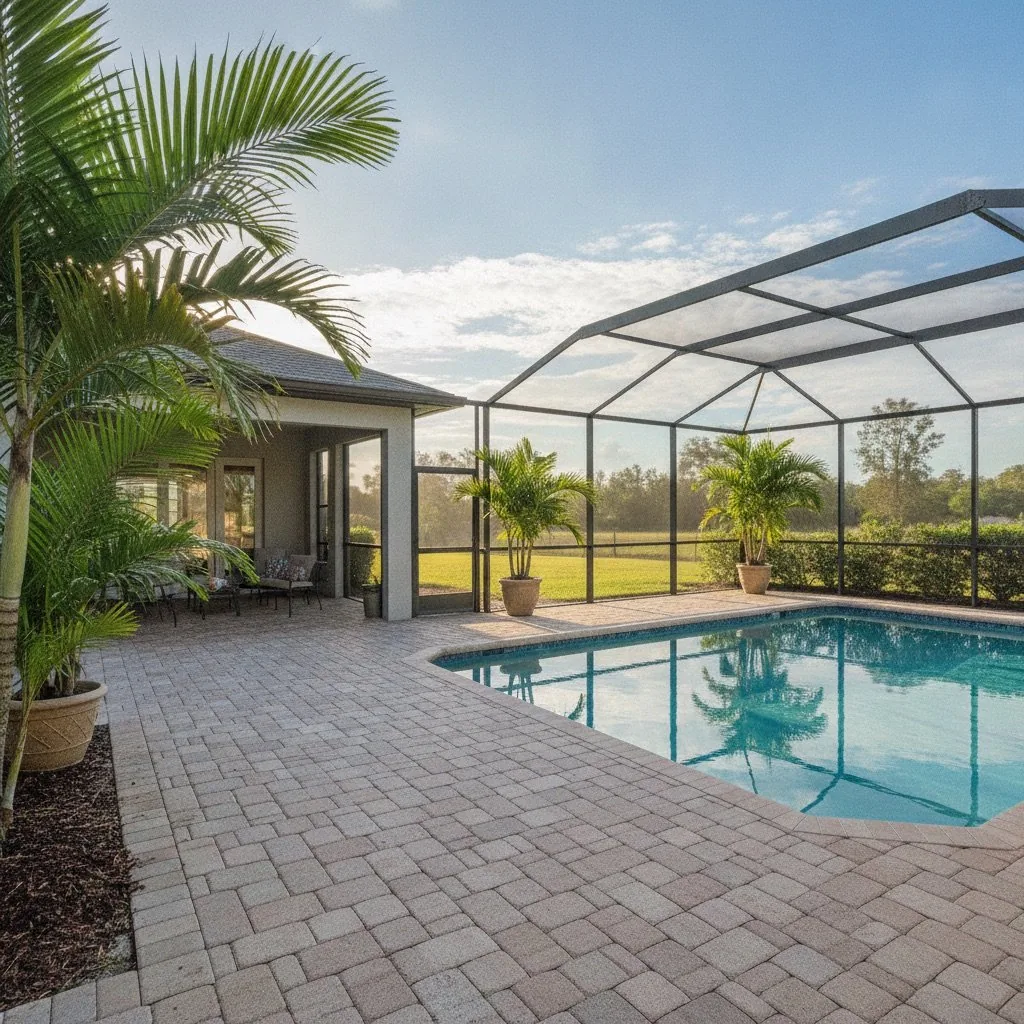
Within a year or two, most pavers pick up black mildew in the shady spots, green film near the sprinklers, weeds in the joints, and a gray, tired look across the whole surface.
The good news is that pavers clean up beautifully. The catch is that they are not a slab of concrete. They are hundreds of pieces held in place by sand. This guide covers how to clean pavers the right way, without blasting that sand out or etching the surface.
How to Clean Pavers Differently Than Concrete
A poured driveway is one solid surface. Pavers are individual units sitting on a base, locked together by the sand in the joints between them. That sand is doing real work.
When it washes out, pavers start to shift, rock, and sink. Weeds and ants move into the empty joints. Edges chip because the units are no longer supporting each other.
So the goal is not just to get the surface clean. It is to get it clean while disturbing the joints as little as possible, then put back whatever sand you lose. Everything below follows from that one idea.
What You Need Before You Start
You do not need a lot of gear to learn how to clean pavers well, but the right pieces make the job faster and safer:
- A pressure washer with a wide fan tip (25 or 40 degree), or a rotary surface cleaner attachment.
- A stiff push broom with nylon bristles, never wire.
- An outdoor surface cleaner made for mold and mildew.
- A stain product matched to the stain: degreaser for oil, a rust remover for orange marks.
- A garden hose to pre-wet plants and rinse.
- Joint sand, ideally polymeric, to refill afterward.
Pick a cool, overcast morning if you can. Cleaners dry too fast on hot pavers in the Florida afternoon sun, which leaves streaks and gives the product less time to work.
How to Clean Pavers Step by Step
Here is how to clean pavers on a driveway, patio, or pool deck from start to finish.
- Clear and sweep. Move furniture, planters, and cars. Sweep off leaves and loose dirt so you are not grinding it around.
- Pull the weeds. Get them out by the root before washing. Spraying over them just spreads seeds.
- Wet the plants. Soak nearby grass and beds with plain water so they do not absorb cleaner.
- Apply cleaner. Spread your mildew cleaner on the pavers and let it dwell for the time on the label. Do not let it dry.
- Scrub problem areas. Hit the darkest spots with the broom while the cleaner works.
- Rinse with controlled pressure. Keep the tip moving at a shallow angle, working in overlapping passes. A surface cleaner gives the most even result.
- Rinse the plants again and let the pavers dry fully, usually a day in the sun.
- Re-sand the joints. Sweep sand into any joint that looks low, then follow the product directions.
How Much Pressure Is Too Much
More pressure feels faster, but it is the most common way people damage pavers. A narrow tip held close can carve lines into the face, expose the stone underneath, and empty the joints in seconds.
Let the cleaner do most of the work and use pressure only to rinse. If you see sand flying out of the joints, back off or widen the tip.
Dealing With Common Florida Paver Stains
Part of knowing how to clean pavers is knowing which stains need their own treatment. General cleaning handles dirt and most mildew. A few stains need their own treatment before you rinse the whole surface.
Black Mildew and Green Algae
These are the big ones in our climate, especially on pool decks and in shade. A mildew cleaner with proper dwell time kills the growth instead of just knocking the top layer off, which is why it comes back slower.
Oil and Fluid Drips
Driveway pavers near where cars park often have dark oil spots. Blot fresh drips, then use a concrete degreaser and a brush. We cover the full process in our guide to getting oil stains off your driveway, and most of it applies to pavers too.
Rust and Irrigation Stains
Orange streaks near sprinkler heads usually come from iron in well water. Bleach will not touch them. You need a rust remover made for masonry. Our post on removing rust stains from concrete walks through it.
White Haze (Efflorescence)
A chalky white film is often salt working its way up from inside the paver. It tends to fade on its own over time. If it stays, an efflorescence cleaner made for pavers is the safe fix. Do not try to blast it off.
Should You Seal Pavers After Cleaning?
Sealing is optional, but many Florida homeowners like it. A good sealer can deepen the color, slow down mildew, make stains easier to clean, and help lock the joint sand in place.
If you seal, timing matters:
- Clean first, and make sure every stain is gone. Sealer locks in whatever is underneath.
- Let the pavers dry completely, often a full day or two.
- Re-sand the joints before sealing, not after.
- Check the forecast. Rain on fresh sealer can leave a cloudy finish.
Sealed or not, knowing how to clean pavers correctly is what keeps them looking right. Sealer on dirty, sandless pavers just preserves the problem.
When to Call a Professional
Learning how to clean pavers yourself is worth it for a small patio. A pro makes more sense when the area is large, the mildew is heavy, or you would rather not risk the joints and the surface.
We are family owned, Fully Insured, and based in the Winter Garden area. Our pressure washing service uses controlled pressure and the right cleaners for each surface. A standard two-car driveway starts at $195, a pool deck runs about $295, sidewalks and curbs are priced with the visit, and every visit has a $195 minimum.
If the pool deck is on your list, the screen enclosure usually needs it too. See our guide to cleaning a pool screen enclosure. Pool screen cleaning is $250. We also serve nearby areas like Winter Garden and Clermont.
Frequently Asked Questions
Can you pressure wash pavers?
Yes, as long as the pressure is controlled and the nozzle stays moving. Use a wide fan tip or a surface cleaner, keep a steady distance, and never aim straight into the joints. Too much pressure blows out the sand and can scar the face of softer pavers.
Should I use bleach to clean pavers?
A diluted cleaner made for outdoor surfaces works on mold and mildew, but rinse plants and grass before and after, and rinse the pavers well. Never mix bleach with other cleaners. For oil or rust, bleach does nothing, so use a stain-specific product instead.
How often should pavers be cleaned in Florida?
Most Central Florida pavers look their best with a cleaning about once a year. Shady areas, pool decks, and spots near sprinklers grow mildew faster and may need it every six to nine months.
Do I need to re-sand pavers after cleaning?
Often, yes. Even careful cleaning removes some joint sand. If the joints look low or empty after they dry, sweep in fresh sand, ideally polymeric sand, which hardens and helps keep out weeds and ants.
Get Your Pavers Looking New Again
Now you know how to clean pavers without washing away the sand that holds them together: sweep, treat, rinse with control, re-sand, and seal if you want to. Done once a year, it keeps your outdoor spaces looking sharp.
If you would rather hand it off, get a price in seconds with the instant estimator on our pressure washing page, book online through Square, or call or text (407) 926-0028.